
The Walker County Court Calendar
The county's free public daily calendar lives at the official Walker Search Docket. It serves Circuit and District settings. Pick county code 64. Choose one of five rolling setting dates. Add a last name if you want one. Leave the name blank and you get the whole daily docket as a PDF.
Know the limits. The tool will not jump to an arbitrary month. It will not revisit old dates, or filter by judge, attorney, courtroom, case number, or case type. It is not a complete Walker County court calendar history either. City settings belong to each municipal court, and Probate Court keeps its own records.
Walker Calendar Five-Date Window
The Walker County court calendar portal is narrow on purpose. Pick the setting date first. Then ask whether a last name helps at all; a blank field actually works better when spelling is shaky or you simply want the full docket call.
A blank PDF does not prove there is no setting. The date may be outside the window, municipal, or omitted from the portal.
If the date falls outside the rolling list, turn to full case detail or the clerk.
How to Find Your Court Date
Hold onto the case number, the court, and the event named on your latest notice. Search county 64 when the date sits inside that short window. For deeper history, AlacourtAccess or the free public terminal will carry you further. The Circuit Clerk's office offers that terminal free. Prefer the phone? The clerk's number, (205) 384-7268, backs up Circuit and District settings.
Visit the Walker courthouse clerk counter at 1803 Third Avenue, Suite 205, Jasper. Come during business hours to view records free. The office terminal can show setting history the daily tool cannot. Bring the case number, court, category, and approximate year. A public party name speeds things up too.
- Read the latest notice and note the number and court.
- Check county 64, full case detail, or the courthouse terminal.
- Compare the newest setting with older reset entries.
- Call the Circuit Clerk or municipal clerk to confirm all fields.
- Check official notices for weather or emergency closure.
Walker Calendar Channel Comparison
Each Walker County court calendar channel answers a different question. The daily PDF tells you who is set on one listed date. AlacourtAccess delivers paid, full case actions; the clerk-office terminal gives free public electronic viewing. A phone call confirms current administrative details. The newest signed notice or order is what controls.
| Channel | Best use | Limit |
|---|---|---|
| Daily docket | Near setting | Five dates |
| Case detail | Reset history | Paid remotely |
| Clerk counter | Free review | Office hours |
| Phone | Confirmation | No legal advice |
For a city ticket, contact the issuing municipal court. Mail also works for copies of notices or orders. It is slow, though, for a date that is close.
A good written request states the case number, court, exact document and date. Add copy type, delivery choice, and callback information. Ask the Walker Circuit Clerk for a fee quote before sending any payment.
Reading a Court Setting
Read a Walker County court calendar row as a whole. The date alone proves little. Match it against the case number or style. Check the Circuit or District division, the event label, and any room or judge listed.
A docket call may set one time for many cases. An individual hearing gets its own time. Never infer a room the source does not state. The live Walker judicial contacts page can connect you to the assigned court. Ask about interpreter or disability accommodation before the event, not after.
| Date | The scheduled day. |
|---|---|
| Time | Docket-call or individual time. |
| Court | Circuit, District, municipal, or other division. |
| Judge or room | Presiding officer and location when supplied. |
| Setting type | Arraignment, pretrial, motion, plea, trial, sentencing, or review. |
Walker Calendar Setting Terms
Event labels tell you why a case sits on the Walker County court calendar. An arraignment deals with a charge and a plea. A docket call groups cases so the court can check each status, and a motion hearing takes up a pending request. Pleas and sentencings carry their own specific criminal purpose.
- Pretrial conference
- The court and parties address readiness, motions, settlement, or plea issues.
- Bench trial
- A trial decided by the judge.
- Review
- A check on compliance with an order or program.
- Reset
- A moved date whose old entry remains.
Use the newest event text rather than guessing from broad status.
Resets, Continuances, and Cancellations
A reset or continuance usually adds a later Walker County court calendar entry. It does not delete the first. Read case actions newest to oldest. A motion asking for a continuance is not proof the court granted it. The latest order or notice controls.
Compare date, time, court, and event, then call the assigned clerk. Weather, a holiday, or an emergency closure may be in play. Check official notices and call before you travel. Never assume a closure wipes out a hearing.
Small claims show the pattern locally. A party with a conflict must seek a continuance by motion. The filing row only proves the request reached the clerk. A later order or notice shows whether the date actually moved.
Walker Calendar Compliance Reviews
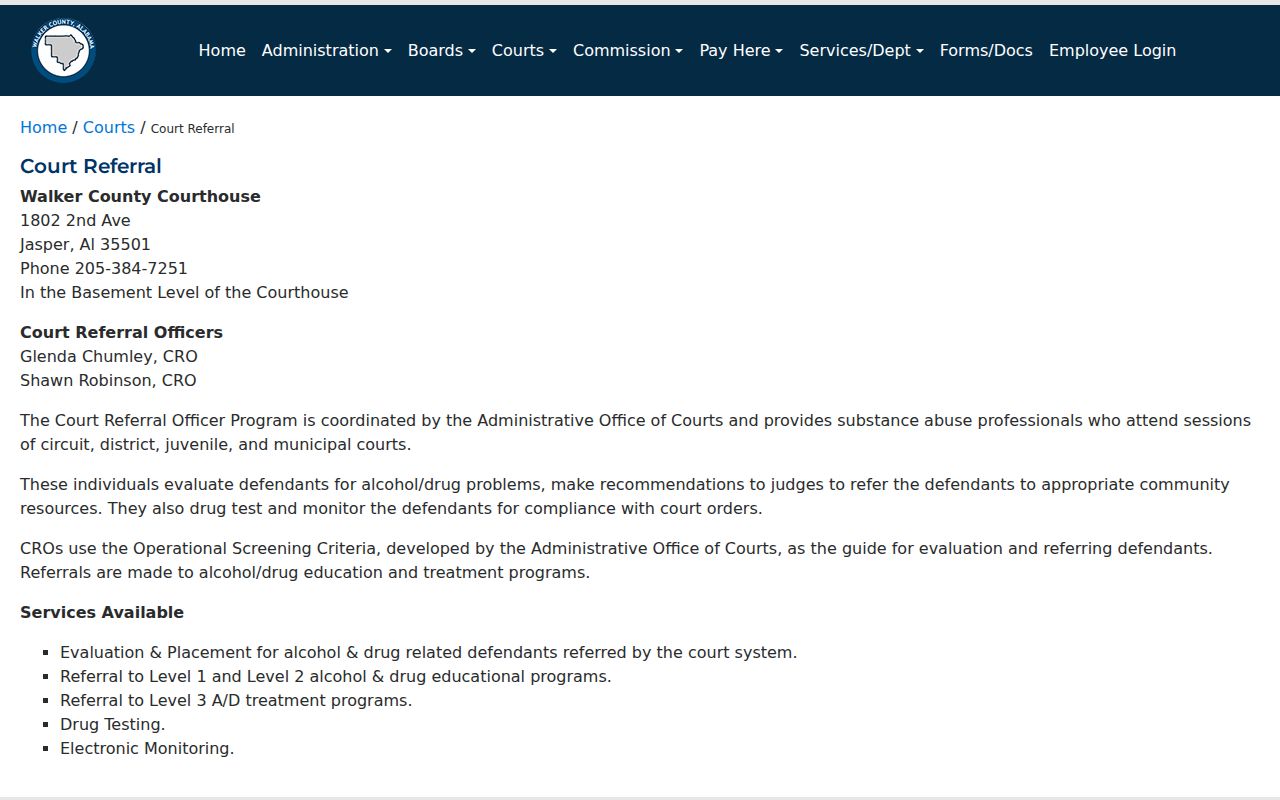
Review or compliance events can appear when the Walker Court Referral Officer Program is involved, taking referrals from Circuit, District, juvenile, and municipal courts. The program runs education and treatment referrals, testing, monitoring, and electronic monitoring. It does not keep the calendar. The official Walker Court Referral page describes the program's services and contacts.
Judge a review label by the underlying case and its assigned court, not by any separate public program docket.
What To Do If You Miss a Setting
Contact the assigned court or your counsel at once. Give the case number. Ask for the current Walker County court calendar status, because the free portal may not show the next step. The clerk can hand over administrative information but cannot advise which motion to file.
Missed a Setting? A missed criminal date can lead to failure-to-appear action, a warrant, or bond consequences.
Call the clerk or counsel promptly and ask what the docket now records.
Seek legal advice about the proper response before making assumptions.
Walker Calendar Small Claims Dates
Small claims in Walker County run on a set pattern. Once the defendant is served, a 14-day clock starts for the answer. If an answer comes in, the clerk generally sets trial six to eight weeks out. The clerk mails the service date. So local instructions ask parties not to call just to ask about it.
A conflict means filing a motion for a continuance. The motion alone moves nothing. Track the Walker County court calendar and the case actions until an order appears. Then confirm with the Circuit Clerk.
A default works differently. With no answer on file, the claimant can file a default request with an affidavit. That filing is not a default judgment and may never generate a hearing row. The docket entry that follows tells the real story, not the response deadline.
See also: 14 days to answer after service.
Walker Calendar Court Boundaries
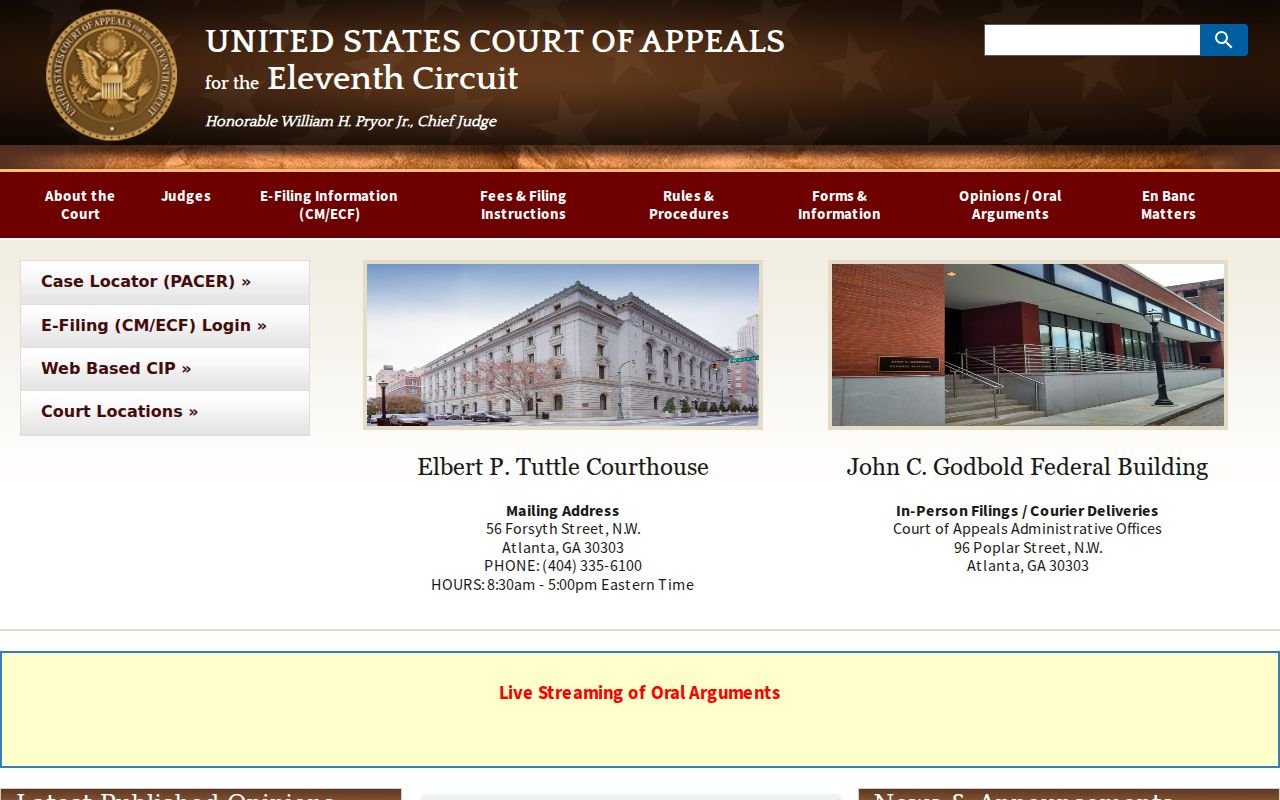
County code 64 does not pull in every case you might expect. A municipal traffic ticket or ordinance setting stays with the issuing city's clerk. Probate Court keeps probate filings. Federal cases that arise in Walker County go to the Northern District of Alabama. Appeals there are heard by the Eleventh Circuit. The official Eleventh Circuit page lists that court's docket information.
Keep that calendar separate from Alabama's county-64 trial docket. Jurisdiction comes first. An appeal date sits on the appellate docket, and treating it as a trial-court setting would misread the county case history still open below it.
Walker Calendar Blank-Result Check
A blank Walker County court calendar search usually has a simple fix. Confirm county 64 and the date you entered. Clear the last-name box and search again. Then ask whether the event falls outside the window, sits in municipal court, or belongs to Probate or federal court. Spelling errors and lawful access limits change results too.
Pull the full case detail or view the file free at the clerk's office to read the latest actions. When your attendance matters, call the assigned clerk. A blank PDF is not a court order and proves nothing about cancellation.
Walker Calendar Latest-Notice Test
Two dates on a docket mean you sort before you assume. Order the entries by filing and find the newest notice, reset, continuance, or order. Compare its case number and event type against the earlier row. One new date can replace a single hearing while other deadlines still stand. The daily PDF verifies a short-range setting, but it never overrides a signed order.
Conflicting records call for a phone call. Give the assigned clerk the case number and both dates. Ask which setting currently shows. Your lawyer handles what to do when an order is unclear. Picking whichever date is convenient is not a safe method.
Write down who confirmed the setting and when. Then weigh that against any later notice from the court. The clerk can share administrative facts but cannot tell you whether to seek a continuance. That procedural call belongs to the party or counsel through the assigned court.
After confirmation, verify more than the date. Check the location and the event type. A rescheduled plea, trial, or review may land at a different time or in a different courtroom. The complete setting controls, not one matching calendar field.